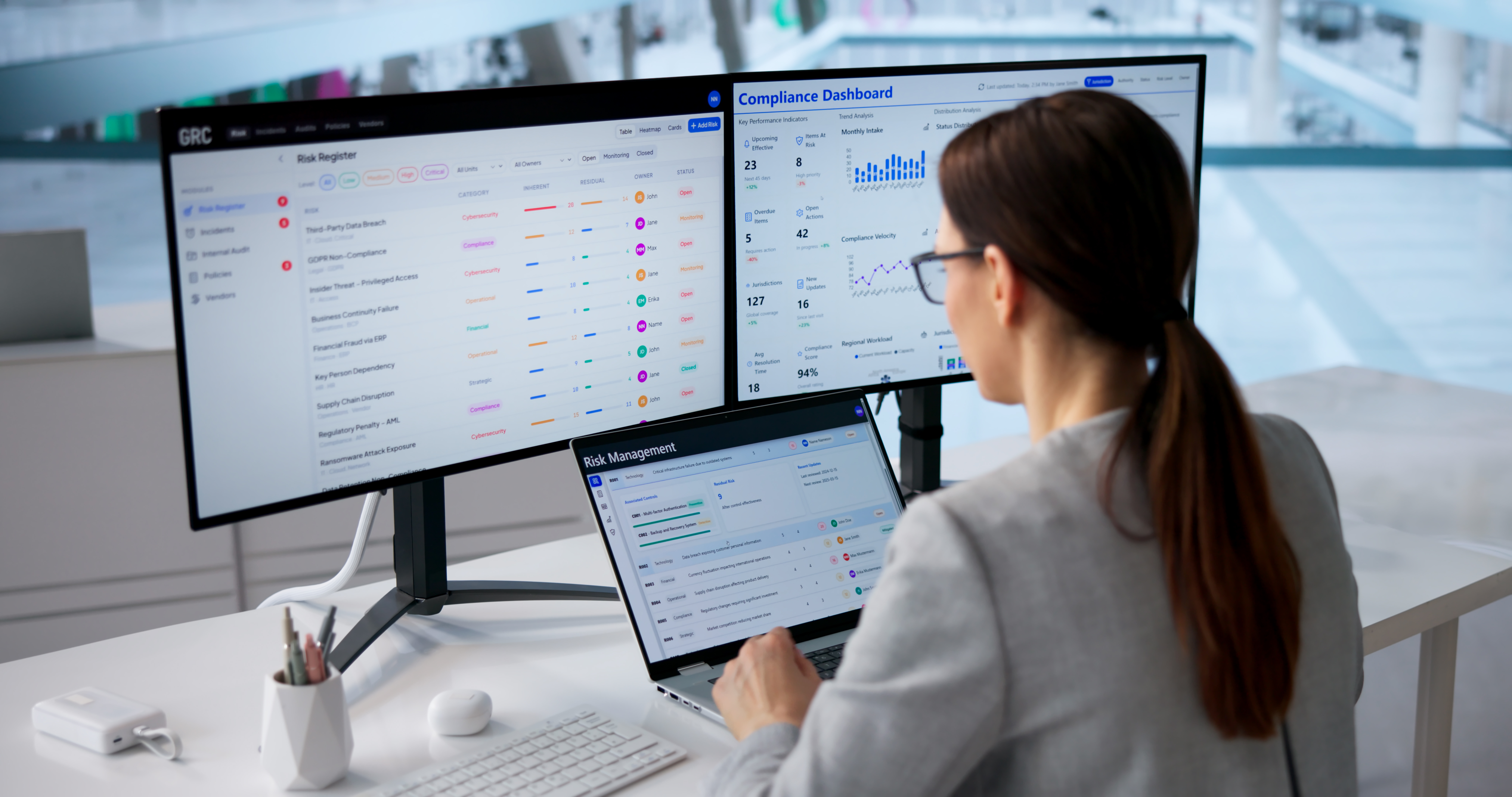
In the early days of IT, cybersecurity was often seen as a purely technical challenge—a game of firewalls, encryption, and antivirus software. Today, that has changed. As cyber threats grow more sophisticated and regulations become more stringent, security is now a business-wide imperative.
This shift has placed Governance, Risk, and Compliance (GRC) at the very heart of modern defense strategies. If you’ve been following our series on day-to-day responsibilities in this field, you know that GRC isn't just about paperwork; it's about building a resilient organization.
Why Cybersecurity Needs GRC
Technical tools can stop an attack, but GRC ensures the organization is prepared to handle the consequences, stay legal, and align its security spend with its most critical assets.
1. Risk-Based Decision Making
Not every server needs the same level of protection. A GRC framework helps security teams prioritize. By identifying which data is "mission-critical" versus "low-risk," companies can allocate their budget and talent where it matters most.
2. Bridging the Communication Gap
One of the biggest hurdles in cybersecurity is explaining technical vulnerabilities to board members. GRC acts as the bridge, translating "SQL Injection risks" into "business continuity impacts." This ensures that leadership understands the stakes and provides the necessary resources.
3. Continuous Compliance
With the rise of frameworks like the EU AI Act and updated versions of SOC 2, compliance is no longer a once-a-year event. Modern cybersecurity GRC focuses on "continuous monitoring," using automated tools to ensure that security controls are working 24/7, not just during an audit.
The Human Element: Security Culture
A firewall won't stop a social engineering attack, but a strong governance policy will. GRC professionals design the "human firewall" by:
Setting clear acceptable use policies.
Implementing robust identity and access management (IAM).
Orchestrating incident response plans that involve legal, PR, and HR, not just IT.
Emerging Trends: GRC in 2026
As we look toward the future of the industry, several new domains are requiring specialized expertise. Many analysts are now seeking professional credentials in these specific areas:
AI Ethics and Governance: Managing the security risks of large language models and automated decision-making.
Supply Chain Resilience: Ensuring that third-party vendors aren't the "weak link" in your security chain.
Zero-Trust Architecture: Moving away from perimeter defense and toward a model where no user or device is trusted by default.
Building Your Career in Cyber GRC
The demand for professionals who understand both the "bits and bytes" of security and the "rules and risks" of business has never been higher. Cybersecurity GRC roles offer a unique path for those who want to be involved in high-level strategy while staying on the cutting edge of tech.
Ready to secure your future? Browse the latest openings on GRC Analyst Jobs and find a role where you can make a real-world impact.